


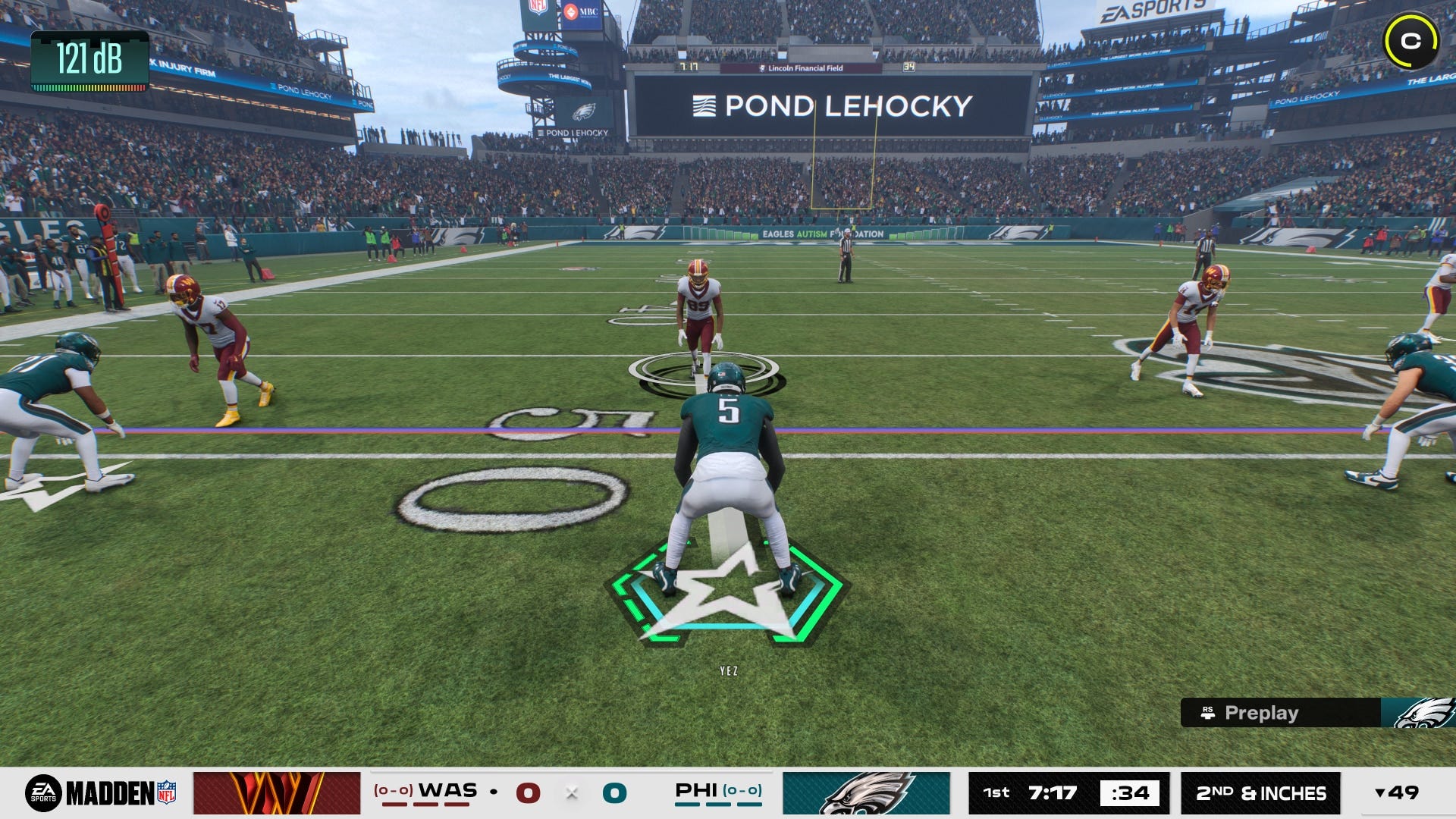
The NFL and Electronic Arts are taking stadium sponsorship beyond the physical ground, allowing official partners to reproduce their real-world signage inside Madden on console and mobile. The Philadelphia Eagles are the first club to participate, with partner Pond Lehocky appearing inside the virtual Lincoln Financial Field.
I first wrote about this direction at MIDiA Research in 2019, when Pizza Hut became the first brand to secure naming rights to a virtual stadium for Madden’s competitive series. At the time, I argued that the larger opportunity extended beyond esports into official sports games, livestreaming and the wider content created around them.
Seven years later, what began as a single esports activation is becoming inventory that every NFL club can effectively sell. Sponsorship inside Madden is not new, but clubs can now extend their physical stadium presence into the game supporters play at home.
The Stadium Follows the Fan Home
Stadium sponsorship has traditionally been constrained by geography and the fixture calendar. A partner buys signage inside a venue, receives exposure during home games and hopes that broadcast and digital coverage carries the association further.
Madden removes many of those limitations because its stadium remains open when the physical ground is empty, reaches supporters who may never attend a game and appears whenever someone selects that team or venue.
EA says fans play more than two billion Madden games across console and mobile each year, equivalent to approximately 23,000 NFL seasons every day. That does not mean every game produces the same commercial value, but it illustrates how much engagement now takes place beyond the league’s live schedule.
Playing also requires a different level of attention from watching because the supporter is actively engaged, selecting teams, calling plays and spending time inside the environment rather than briefly encountering a logo during a commercial break.
For many younger supporters (like myself with Madden 64 in 1997), Madden is one of the places where their relationship with the NFL is built, rather than simply a game they play alongside it.
The Experiment Has Become Inventory
Pizza Hut’s virtual naming right was attached to the Madden Championship Series rather than the version of Madden played by millions of supporters throughout the year. The Washington Commanders later explored virtual signage through NFL Pro Era, although that remained an individual club agreement inside a more limited virtual reality product.
Nor is the appearance of real-world sponsorship inside a sports game itself new. EA Sports FC has long reproduced shirt sponsors and stadium branding as part of its licensed club environments. The innovation for the NFL is turning that representation into a defined commercial right that every club can monetise.
The new programme takes that original idea across the league, giving all 32 teams the opportunity to extend existing stadium rights into Madden.
That creates a new line on the rights menu, but clubs will need to decide precisely what they are selling.
Virtual signage could be included within an existing stadium package, offered as a paid upgrade or separated into its own entitlement. The decision will determine whether clubs create additional revenue or simply add another benefit to partnership agreements that are already becoming crowded.
There are also important questions over ownership. The club owns the relationship with its partner, the NFL controls league rights and EA owns the environment in which the inventory appears. The commercial model must establish who prices the asset, who receives the revenue and who controls the data required to prove its value.
Contract expiry, creative changes and category conflicts must also be managed across the physical and virtual stadiums. If the digital environment is being sold as an extension of the real venue, it cannot be allowed to become a collection of outdated partners and competing claims.
Authenticity Cannot Become Advertising Creep
Real sponsorship can make Madden more authentic because commercial branding is part of every modern stadium. Recreating Lincoln Financial Field without the signage supporters associate with the venue would make the digital version less recognisable.
If a sponsor appears on the LED boards at SoFi Stadium, it should be represented in the same place within Madden. The line is crossed when the game creates inventory that does not exist in the physical venue, interrupts play or introduces targeted advertising purely because the technology allows it. This should extend rights that already exist, not manufacture new ways to reach the player.
Players are unlikely to object to branding that belongs inside the stadium they recognise. The problem begins when the advertising feels inserted rather than inherited from the real venue.
The opportunity is to recreate the stadium as supporters know it, not treat every digital surface as another asset to sell.
Measure the Minutes Not Just the Logo
Two billion Madden games should not be presented as two billion sponsor impressions.
Clubs should measure how often each stadium is selected, how long players spend inside it, where the signage appears and how clearly it can be seen during play. Partners will also need unique reach, frequency, geography and the demographic profile of the people exposed.
The reach does not stop with the person holding the controller. Livestreams, clips, tutorials and creator content can carry the virtual signage to audiences who may never own the game themselves. I identified that wider distribution opportunity in 2019, and the growth of gaming content has only made it more relevant.
Those audiences should still be measured separately. Playing, watching a livestream and briefly encountering a clip are different forms of attention and should not be blended into one flattering number.
EA should be able to provide more precise information than a physical perimeter board ever could. The opportunity is not simply to recreate traditional sponsorship inside a digital product, but to improve the evidence sitting behind it.
Challenges, rewards and branded content could eventually give the player something in return, but they should be treated as separate activations rather than justified as extensions of physical signage.
The Virtual Perimeter Stays Open
Few rights holders have access to a game with Madden’s scale, but the commercial lesson extends beyond the NFL.
Commercial programmes should be built around where fandom happens, rather than only around the locations a rights holder physically controls. Supporters watch highlights, play games, follow creators, join fantasy competitions and debate their teams throughout the week. Those behaviours create opportunities for partners that a matchday inventory list will never fully capture.
The NFL was already using gaming to future-proof its audience when Pizza Hut entered Madden’s competitive series. It is now applying the same thinking to the sponsorship model surrounding that audience.
Whether this becomes a valuable new right will depend upon who owns and prices the inventory, whether the digital stadium remains faithful to the real one and whether clubs can prove what partners actually receive.
Done properly, the virtual stadium can extend the value of a partnership without requiring another fixture, seat or physical advertising board.
The stadium no longer ends at the turnstile, and the rights being sold around it should not end there either.